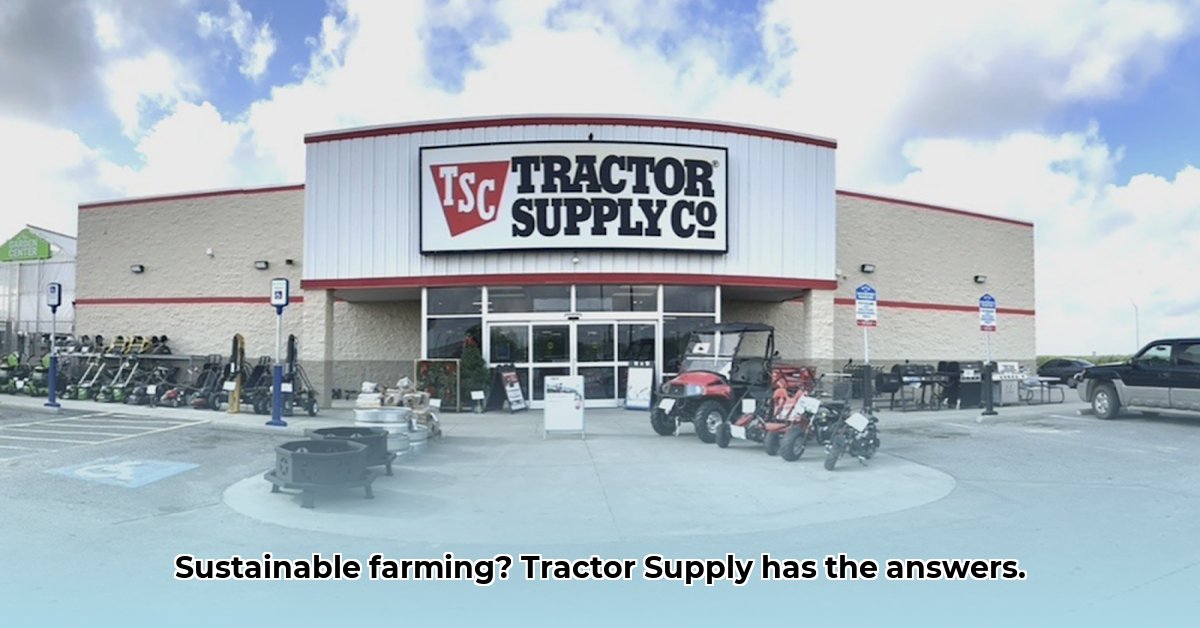
Sustainable Farming in Brownsville: A Tractor Supply Perspective
Farming sustainably in the Brownsville, Tennessee area presents unique challenges and opportunities. This guide explores how Tractor Supply (TSC) in Brownsville can contribute to this important goal, acknowledging current limitations in available data while offering actionable steps for all stakeholders. We will highlight what we know definitively, clearly stating where further research is needed. For seed options, check out this helpful resource: Deer Food Plot Seeds.
Current Understanding of TSC's Role in Sustainable Farming
Currently, comprehensive data on the specific sustainable farming products available at the Brownsville TSC location is limited. While TSC's website advertises a range of products relevant to sustainable agriculture, a detailed inventory specific to the Brownsville store is not readily accessible. This lack of readily available data makes it challenging to quantify TSC's precise contribution to sustainable farming in the immediate area. For example, while we know the Brownsville location's Tuesday hours are 8 am to 9 pm, specific inventory details on organic seeds, water-saving irrigation systems, or fuel-efficient equipment are lacking.
This data gap underscores the need for further investigation. The proximity of the store to major highways like I-40 suggests accessibility for larger farms, but its impact on smaller, local farms requires further study.
Critical Data Gaps and Required Research
To accurately assess TSC's role, we require more precise information, including:
- Product Inventory: A detailed inventory of sustainable farming products available at the Brownsville TSC store, including organic and non-GMO seeds, water-conserving irrigation systems, and fuel-efficient tools.
- Customer Base: Data on the proportion of local farmers utilizing the Brownsville TSC store, their specific purchasing patterns, and the extent to which they utilize sustainable farming practices.
- TSC Sustainability Initiatives: Details on TSC's internal sustainability goals, eco-friendly packaging initiatives, and energy-efficiency efforts at the Brownsville location and company-wide.
- Community Impact: Qualitative and quantitative data on TSC's economic impact on the Brownsville farming community, its support for local farmers, and its role in fostering local food systems.
Actionable Steps: A Collaborative Approach
Addressing these data gaps necessitates a collaborative effort:
1. Local Farmers:
- Immediate Action: Visit the Brownsville TSC store, assess the available sustainable farming products, provide feedback to staff on unmet needs, and suggest product lines that would support your sustainable farming practices.
- Long-Term Strategy: Collaborate with other local farmers to advocate for a wider selection of sustainable agricultural products at the Brownsville TSC store, potentially through formal feedback mechanisms or by engaging directly with store management.
2. Tractor Supply Company (TSC):
- Immediate Action: Conduct a comprehensive inventory review of all sustainable agriculture products stocked at the Brownsville location.
- Long-Term Strategy: Develop and maintain a publicly accessible, regularly updated online inventory of the Brownsville store, specifically highlighting products relevant to sustainable agriculture, alongside detailed information about their sustainability features. Consider providing local farmer-focused workshops and educational materials to promote appropriate adoption of sustainable farming techniques.
3. Environmental Groups:
- Immediate Action: Conduct surveys and interviews with local farmers to gauge the importance of sustainable farming practices and the role of TSC in their operations.
- Long-Term Strategy: Partner with TSC to promote sustainable agriculture, potentially through joint educational initiatives or advocacy campaigns to incentivize the adoption of sustainable farming techniques within the region.
4. Local Government:
- Immediate Action: Support initiatives promoting local food systems and farmers’ markets.
- Long-Term Strategy: Offer grants or incentives to farmers adopting sustainable practices, potentially facilitated through collaboration with TSC. Invest in programs fostering local food security, ensuring access to quality sustainable produce within the community.
Speculative Future Trends and TSC's Potential Role
While lacking definitive data, the increasing national trend toward sustainable and organic products suggests a potential future role for TSC in Brownsville. This could involve broadening the store's product offerings to emphasize organic seeds, water-efficient irrigation, and energy-efficient equipment. TSC could also leverage its marketing to highlight its contribution to the sustainability of the local agricultural sector. This, however, remains speculation, dependent on consumer demand, supplier availability, and TSC's overall commitment to sustainable business practices. Further research is vital to validate these potential future scenarios.
Conclusion: The Need for Transparency and Collaboration
The sustainable future of Brownsville's agriculture hinges on the collaborative efforts of all stakeholders. TSC possesses substantial potential to contribute to this future, but transparent data collection and reporting are essential. Further research, data sharing, and open communication will be vital to determining TSC's precise impact and to ensure a more sustainable agricultural future for the Brownsville community.